

Editor’s Note: The following article was written by Andrea Rodriguez, one of the Tribuno’s summer interns.
During a warm day, a campesino waited in line on his day off after he had heard of a health fair from fellow community members. He walked through the examination, assessing his blood pressure, heart rate, and meeting one-on-one with a physician.
Upon reaching the end of his walk-through, the man sat down to give a representative his feedback on the event. He noted that this event had provided him with the first medical examination he had received in his entire life. He was in his forties.
This man’s experience is only one of many amongst farm workers. According to the Berkeley Food Institute, farm workers face limited access to health care through several barriers. Despite holding a higher risk for chronic diseases, farm workers are often unable to obtain the care they need.
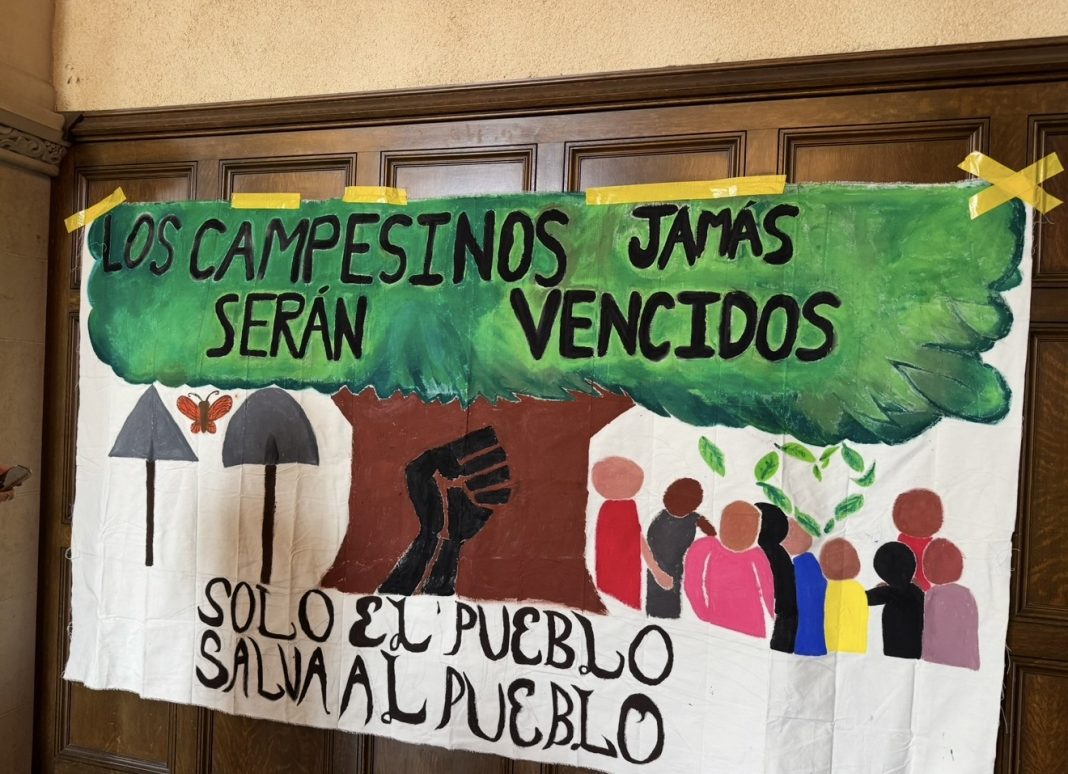
Compas at UCLA is a student-led organization dedicated to bridging the barriers campesinos face in health care. In the past year, UCLA undergraduate students partnered with local organizations to host health fairs. Compas organizes events in communities with a farmworking population, and this way, it was able to help support this man and many others in receiving the medical care they should have access to.
Since 2019, Compas has sought to address the specific needs of farm workers in health care while also tackling the issues beyond medical services. Compas structures their organization’s efforts through the critical necessities of the community. Education, legal advocacy, health care, and research.
Compas aims to not only provide resources to address the unique needs of the community but also prioritizes education as a way to create change. Through ESL classes, any member of the community can join the virtual workshops. The classes come at no cost to learners, usually scheduled in the evenings to accommodate farm workers’ schedules!
“Teaching ESL learners has been meaningful to me because I can see how people become more comfortable participating and practicing their English skills when they start gaining confidence throughout the learning process, which I believe is one of the best ways to empower people learning a new language,” says Compas ESL director, Yoharis.
While Compas recognizes the value of education within the farmworking community, the organization also seeks to spread the knowledge of the issues many campesinos face. Compas attends university-wide events to teach the wider LA community about the reality of the people who feed the nation. Just last year, Compas members conducted a research study to dive deeper into how food is sourced right in their own university, learning about the farms that supply UCLA dining halls.
As Compas remains committed to learning and addressing the current needs of farm workers, the past year’s efforts have been heavily dedicated to addressing the ICE raids across the country. According to the US Department of Agriculture, forty percent of farm workers in the country are undocumented. This means many farmworking communities are targeted and that beyond the struggles of their job, campesinos are often faced with the fear of showing up to work one day and being taken away from their families.
Compas aims to provide support in any capacity during this time. Oftentimes, this means simply listening to community members and connecting them with resources. During Red Card Distributions, Compas members were able to talk to campesinos whose communities have been largely affected by raids. They expressed how the raids have clouded their minds and made them feel anxious to go to work, but they also communicated how important it is to see others engage in these problems. One woman specifically expressed how seeing people willing to advocate with campesinos made her realize she wasn’t so isolated.
And this all connects back to Compas’ mission. Working with the community is essential to the organization’s efforts. Connecting to local organizations that provide emergency legal assistance, housing, or food, often comprised of farm workers themselves, has been pivotal in building a collaborative movement to not only provide temporary resources but create genuine change for farmworking communities. Creating a dialogue with the people Compas serves and centering their work in the movement is essential in building an educational, empathetic, and powerful path to a healthy and safe life for all farm workers. Compas is committed to assisting in combating the inequities farm workers face now, but also to improving the conditions for farm workers and their children’s tomorrow.
Tribuno del Pueblo brings you articles written by individuals or organizations, along with our own reporting. Bylined articles reflect the views of the authors. Unsigned articles reflect the views of the editorial board. Please credit the source when sharing: tribunodelpueblo.org. We’re all volunteers, no paid staff. Please donate at http://tribunodelpueblo.org to keep bringing you the voices of the movement because no human being is illegal.